


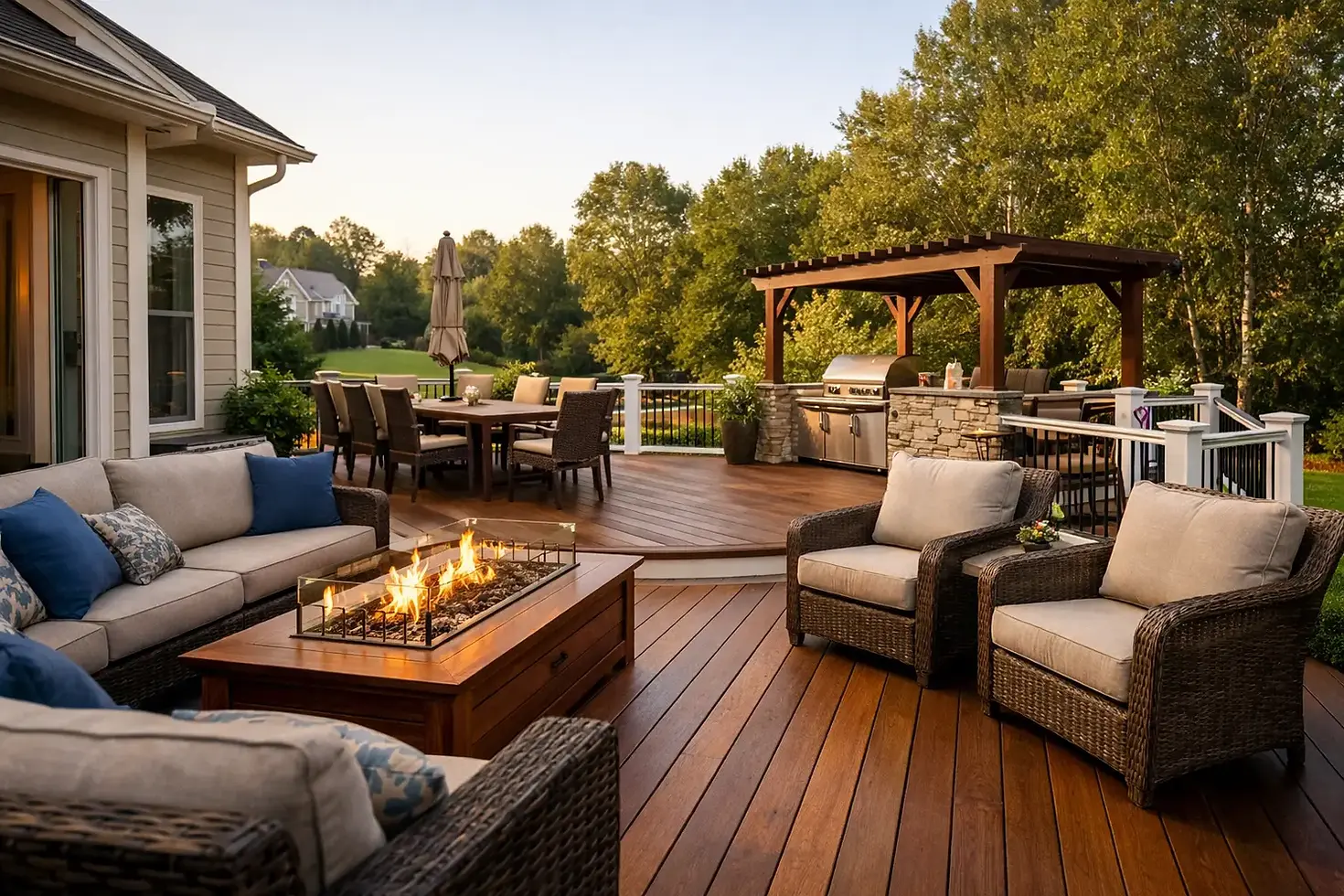
Custom Deck Builder Stafford VA Homeowners Trust
A backyard deck should feel solid underfoot, fit the way your family actually lives, and hold up through Virginia heat, rain, and changing seasons. If you're searching for a custom deck builder Stafford VA homeowners can rely on, the real question is not just who can build a deck - it is who can build the right deck for your home, your lot, and the way you plan to use it for years.
What a custom deck builder in Stafford VA should actually deliver
A custom deck is not a box checked off a standard menu. It should be designed around your house, yard, elevation, traffic flow, and maintenance expectations. That matters in Stafford, where one home may need a low-profile backyard entertaining space and another may require a raised deck with stairs, railings, and a clean transition from the back door to the yard.
A dependable builder starts by looking at the full picture. That includes how much sun the space gets, whether drainage could become a problem, how the deck ties into the structure of the home, and what size makes sense without overwhelming the yard. Good design is practical first. If the layout does not work, even the best materials will not fix it.
Homeowners often begin with a simple goal like wanting more room for grilling or a better place for family gatherings. A skilled contractor helps shape that idea into something buildable, durable, and worth the investment. That is where experience shows. You want a team that understands carpentry, not just sales.
Why custom matters more than off-the-shelf design
Plenty of decks look fine in a photo. Fewer still feel right once they are built. A custom approach helps avoid common problems like awkward stair placement, wasted corners, narrow usable space, or materials that do not match the home.
For some homeowners, custom means creating enough space for outdoor dining and a separate lounge area. For others, it means solving a grade issue, wrapping around an addition, or choosing low-maintenance boards that cut down on upkeep. The right design depends on how you want to use the space and how much maintenance you are willing to take on.
There are trade-offs, and a good builder should be upfront about them. Wood can offer a classic look and lower upfront cost, but it requires ongoing maintenance. Composite and PVC products can reduce long-term upkeep, but the material price is higher. Bigger is not always better either. A well-proportioned deck with a smart layout often delivers more value than an oversized platform that eats up the yard.
Choosing materials for long-term performance
Material selection is where many homeowners either protect their investment or set themselves up for frustration. In Stafford, decks need to stand up to moisture, temperature swings, sun exposure, and regular use. That means appearance matters, but performance matters more.
Pressure-treated wood remains a solid option for homeowners who want a traditional deck and are comfortable with maintenance. When built correctly and maintained over time, it can perform well and look great. The key is understanding that staining, sealing, and periodic upkeep are part of the package.
Composite decking is a popular choice for families who want durability with less maintenance. Brands like Trex are often chosen because they resist rot, insect damage, and many of the issues that can shorten the life of untreated materials. PVC and premium options such as Azek can be a strong fit too, especially for homeowners focused on moisture resistance and long-term ease of ownership.
The best choice depends on budget, appearance, and expectations. If you want the lowest maintenance path, composite or PVC usually makes more sense. If natural wood grain and lower initial cost are your priorities, wood may be the better fit. A quality builder should walk you through those differences clearly, without pushing a one-size-fits-all answer.
The design details that separate a good deck from a frustrating one
Most deck problems do not start with color choice. They start with planning mistakes. The layout should account for furniture size, grill clearance, stair access, railing style, and how people move from inside the home to the deck and out into the yard.
For example, a deck built mainly for entertaining may need wider stairs, stronger lighting plans, and enough open floor space to avoid crowding. A family-focused deck may need safe railing spacing, smoother transitions, and materials that are easier to clean after heavy use. If the deck is elevated, structural precision becomes even more important.
There is also the question of whether the project should include other exterior features. In many cases, homeowners planning a deck should also think about porches, fences, or complementary structures that complete the outdoor space. Handling those elements together can create a better result than treating them as separate projects months apart.
What to expect from the building process
A professional deck project should feel organized from the start. First comes the consultation, where the builder learns what you want, evaluates the site, and talks through material and layout options. After that, the scope becomes clearer - size, style, elevations, stairs, railings, finishes, and any extra features.
From there, the real value is in execution. A quality contractor handles the details that homeowners should not have to chase down on their own. That includes planning, material coordination, construction, and finishing work. You should not be left managing the project piece by piece.
Communication matters here. Homeowners do not need a daily lecture on construction methods, but they do need clear expectations on timeline, pricing, and what happens next. Straight answers build trust. So does clean workmanship. If a builder is proud of the finished product, that usually shows up in the small details as much as the major structure.
How to evaluate a custom deck builder Stafford VA residents are considering
Not every contractor offering decks brings the same level of skill to the job. The safest choice is usually a builder who treats deck construction as a craft, not a side offering. Look for experience across wood, composite, Trex, PVC, and related structures, because versatility often reflects real hands-on knowledge.
Ask practical questions. How do they approach design? What materials do they recommend for your goals? How do they handle repairs or site-specific challenges? Can they build a deck that looks right with your home rather than one that simply fills the space?
It is also worth paying attention to how they talk about the work. Contractors focused only on speed or price can leave out the issues that matter later, like durability, structural integrity, and maintenance demands. A dependable builder is usually straightforward about trade-offs and willing to explain why one choice may serve you better than another.
That is where a company like Top Notch Decking stands out. A craftsman-first approach, backed by real carpentry experience and a focus on long-lasting exterior structures, gives homeowners a better chance of getting a finished space that performs as well as it looks.
Budget, value, and the real cost of cutting corners
Most homeowners are balancing vision with budget, and that is reasonable. The goal is not to spend more than necessary. The goal is to spend wisely on a structure that lasts.
A lower bid can look appealing until material quality, framing standards, or finishing details start to show their weaknesses. Repairs, premature board replacement, and layout regrets can make a cheap project expensive over time. On the other hand, the highest price is not automatically the best value either. What matters is whether the builder is delivering sound construction, quality materials, and a finished deck that fits the home and holds up.
Financing can help some homeowners move forward sooner, especially when the project improves daily living and long-term property value. But even with financing, the work itself has to justify the investment. A deck should not feel temporary.
Building for how you live now and later
The best deck projects are not just attractive on installation day. They keep working year after year. That means building with the future in mind - how your family uses the space now, how maintenance will fit your routine, and how the structure will age in Virginia weather.
Some homeowners need a simple, durable platform for quiet evenings and weekend cookouts. Others want a larger outdoor living area that supports entertaining, safer access to the yard, or a cleaner connection between the home and the outdoors. Both are valid goals. The right builder respects the difference and builds accordingly.
If you are planning a deck, think beyond square footage and color samples. Think about craftsmanship, structure, materials, and whether the final result will still make sense five or ten years from now. A well-built deck is not just an upgrade for the backyard. It is a part of the home you will use, notice, and appreciate every season.


Comments