


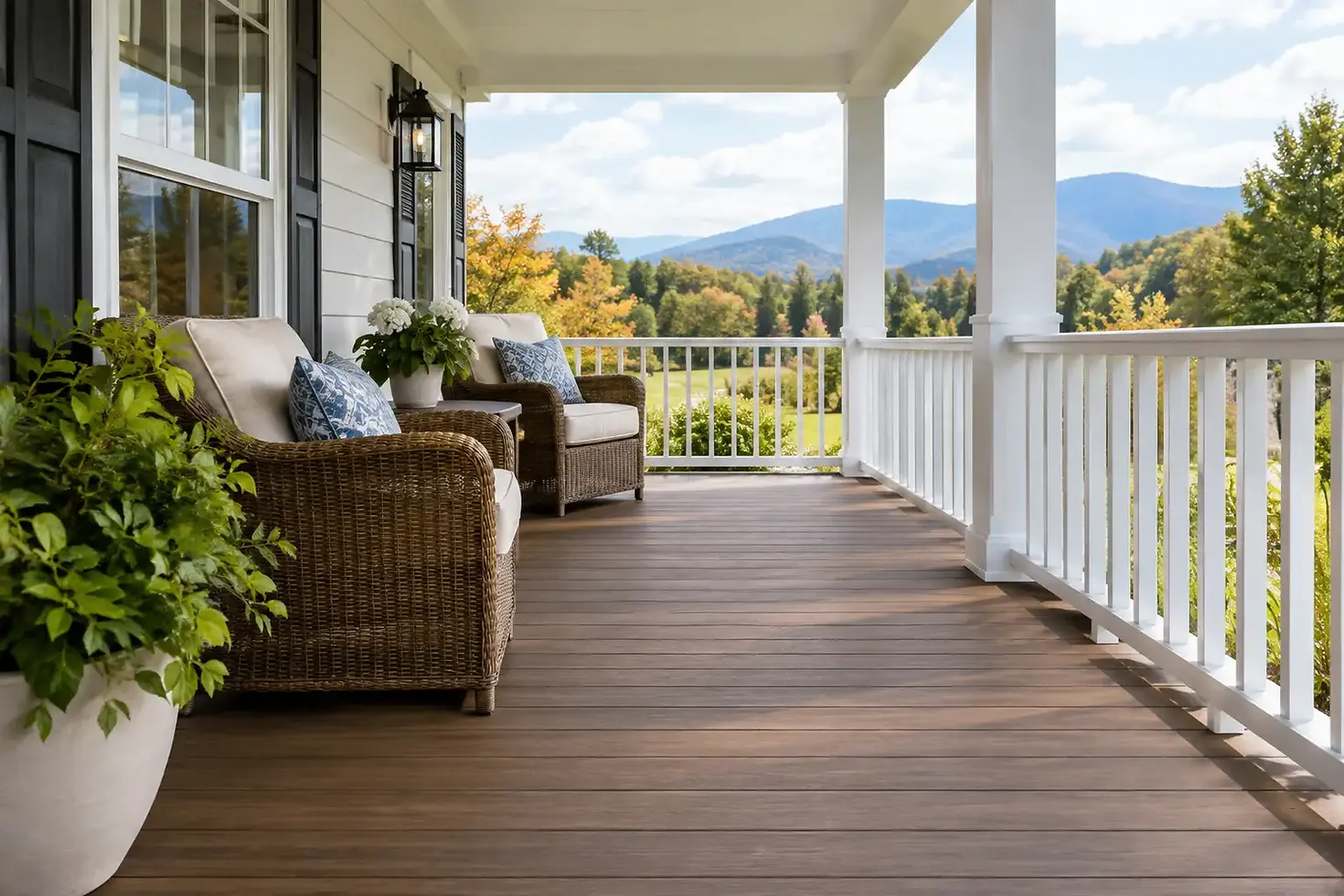
Best Porch Flooring for Weather in Virginia
A porch floor in Stafford has to handle more than the occasional rainy afternoon. It may sit through humid summers, blowing rain, freezing nights, muddy shoes, pollen, and long stretches of direct sun. The best porch flooring for weather is the material that suits those conditions while matching how much maintenance you are willing to take on.
There is no single right answer for every home. A deep, covered front porch has different needs than a screened porch that sees wind-driven rain or a three-season room with large openings. The framing below the floor, the amount of airflow, drainage details, and installation quality all matter just as much as the boards you choose.
What Virginia Weather Does to a Porch Floor
Northern Virginia weather puts outdoor materials through frequent changes. Summer heat expands boards. Winter cold contracts them. Humidity can cause natural wood to swell, while rain that lingers in low spots can invite rot, mildew, and surface staining.
A covered porch gets some protection, but it is not weatherproof. Moisture still reaches the floor from wind, wet footwear, condensation, and humidity rising from the ground below. On porches without good airflow, that moisture takes longer to dry. That is why a porch floor should be selected as part of the whole build, not as a cosmetic finish chosen at the end.
For a floor that lasts, the construction needs proper joist spacing, flashing where the porch meets the house, adequate slope or drainage, and clearance that allows the structure to dry. Quality materials perform better when they are installed correctly.
Best Porch Flooring for Weather: The Main Options
Pressure-Treated Wood: A Practical, Traditional Choice
Pressure-treated lumber remains a solid porch flooring choice for homeowners who want the look and feel of real wood at a practical starting cost. It is treated to resist decay and insect damage, which makes it far better suited to exterior use than untreated lumber.
The trade-off is maintenance. Pressure-treated boards need time to dry after installation, then should be protected with a quality stain or sealer. Over time, homeowners should expect to clean the surface and reapply protection as needed. Without that care, wood can check, splinter, fade, and develop mildew staining, especially in shaded or damp areas.
Wood is often a good fit for covered porches where homeowners appreciate a natural appearance and do not mind periodic upkeep. It can also be repaired board by board more easily than some manufactured products. The key is choosing quality lumber and allowing for proper drainage and ventilation beneath the floor.
Composite Flooring: Strong Performance With Less Upkeep
Composite boards combine wood fibers and polymers to create a durable surface that resists many of the problems associated with natural wood. Products such as Trex are popular for porches because they do not require routine staining or sealing, and they stand up well to moisture, fading, and everyday foot traffic.
For homeowners who want to spend weekends using the porch instead of maintaining it, composite is often the best balance of appearance, durability, and long-term care. A simple wash with mild soap and water is generally enough to keep it looking good.
Composite does have a higher initial cost than pressure-treated wood. It can also retain more heat in direct sun, particularly in darker colors. On a porch that gets afternoon sunlight, color selection matters. Lighter tones can make the surface more comfortable underfoot while still delivering the low-maintenance benefits many homeowners want.
Not every composite board is designed for every porch application. Board profile, manufacturer installation requirements, joist spacing, and ventilation must all be considered. A professional builder can match the product to the porch design rather than forcing one material into every situation.
PVC Porch Flooring: Maximum Moisture Resistance
PVC flooring is made without wood fibers, giving it excellent resistance to moisture, rot, and insect damage. For a porch exposed to frequent rain, persistent shade, or damp ground conditions, PVC can be one of the strongest long-term material choices.
High-quality PVC products, including options from Azek, offer a clean, finished appearance and low maintenance. They will not absorb water the way wood can, which is a major advantage around entry doors, uncovered sections, and screened porches exposed to wind-driven rain.
The upfront investment is typically higher than both pressure-treated wood and standard composite. PVC also expands and contracts with temperature changes, so correct fastening and spacing are essential. This is not a material to install by guesswork. Done properly, however, it provides an exceptionally durable porch surface for homeowners who prioritize weather resistance and minimal upkeep.
Porch-Specific Boards and Tongue-and-Groove Products
Some porches call for a more finished floor with tighter board joints. Tongue-and-groove wood, composite, or PVC porch boards can create a refined look, especially on covered front porches and traditional home designs. These products often hide fasteners and reduce the open gaps found on standard deck boards.
They are not automatically the best option for every exposed porch. Tight joints can hold moisture if the floor is not properly detailed, and porch-specific products must be installed according to the manufacturer’s drainage requirements. For a fully covered porch with good ventilation, they can look excellent. For a floor that gets repeatedly soaked by rain, a board system with open drainage gaps may be the smarter choice.
Match the Material to Your Porch Conditions
The right floor starts with an honest look at what the porch will face. Four questions usually narrow the decision quickly:
How much direct rain reaches the flooring during storms?
Does the porch receive full afternoon sun, full shade, or a mix of both?
Is there enough open space below the floor for air to move and moisture to escape?
Do you want the character of wood, or do you prefer a lower-maintenance surface?
A covered front porch with deep overhangs may do well with well-maintained pressure-treated wood or a tongue-and-groove porch board. A screened porch that catches rain through the screens benefits from composite or PVC. An uncovered porch facing strong sun and regular storms may be best served by a capped composite or PVC system selected for that exposure.
Foot traffic matters, too. A porch used as the family’s main entrance sees wet boots, pet claws, furniture movement, and daily wear. In that case, a durable composite or PVC surface can make practical sense even if natural wood better matches the original budget.
Color, Texture, and Safety Matter in Wet Weather
Weather performance is not only about preventing rot. A porch floor should remain comfortable and safe when it is wet. Smooth, glossy surfaces can become slick after rain, pollen, or leaf debris. Textured boards and finishes can provide better traction while keeping a natural-looking appearance.
Color affects both maintenance and comfort. Very dark boards can show dust and pollen more quickly and may feel hot in summer sun. Very light boards can show mud and scuff marks. Mid-tone colors often offer a practical middle ground for busy households in Virginia.
If the porch includes steps, consider contrasting trim or a defined edge treatment. It can improve visibility in lower light and give the finished structure a more intentional look. The best flooring should work with the entire porch, including railings, skirting, stairs, and the home’s exterior style.
Installation Is What Protects Your Investment
Even premium flooring can fail early when water is trapped beneath it or fasteners are installed incorrectly. This is especially true on older porches, where framing may be undersized, out of level, or already showing signs of moisture damage.
Before installing a new floor, inspect the structure below. Damaged joists, inadequate ledger flashing, and poor drainage should be corrected first. Using the proper fasteners helps prevent surface damage, movement, and premature wear. Careful spacing allows boards to expand, contract, and drain as intended.
At Top Notch Decking, we look at the full porch system before recommending materials. That means considering the exposure, structural condition, style of the home, and the level of maintenance you expect from your outdoor space. Quality comes first because the details under the finished floor are what help it stay that way.
A Smart Choice Lasts Beyond the First Season
Pressure-treated wood is a dependable choice when you want real wood and are prepared to maintain it. Composite delivers a durable, low-maintenance surface for many covered and screened porches. PVC is often the strongest option where moisture resistance is the top priority. Each can be the right material when it is matched to the porch and installed with care.
Choose a flooring system that fits the weather your home actually sees, not just the look of a sample board in a showroom. A well-built porch floor should feel solid underfoot, drain properly after a storm, and give your family a place to enjoy for years.


Comments