


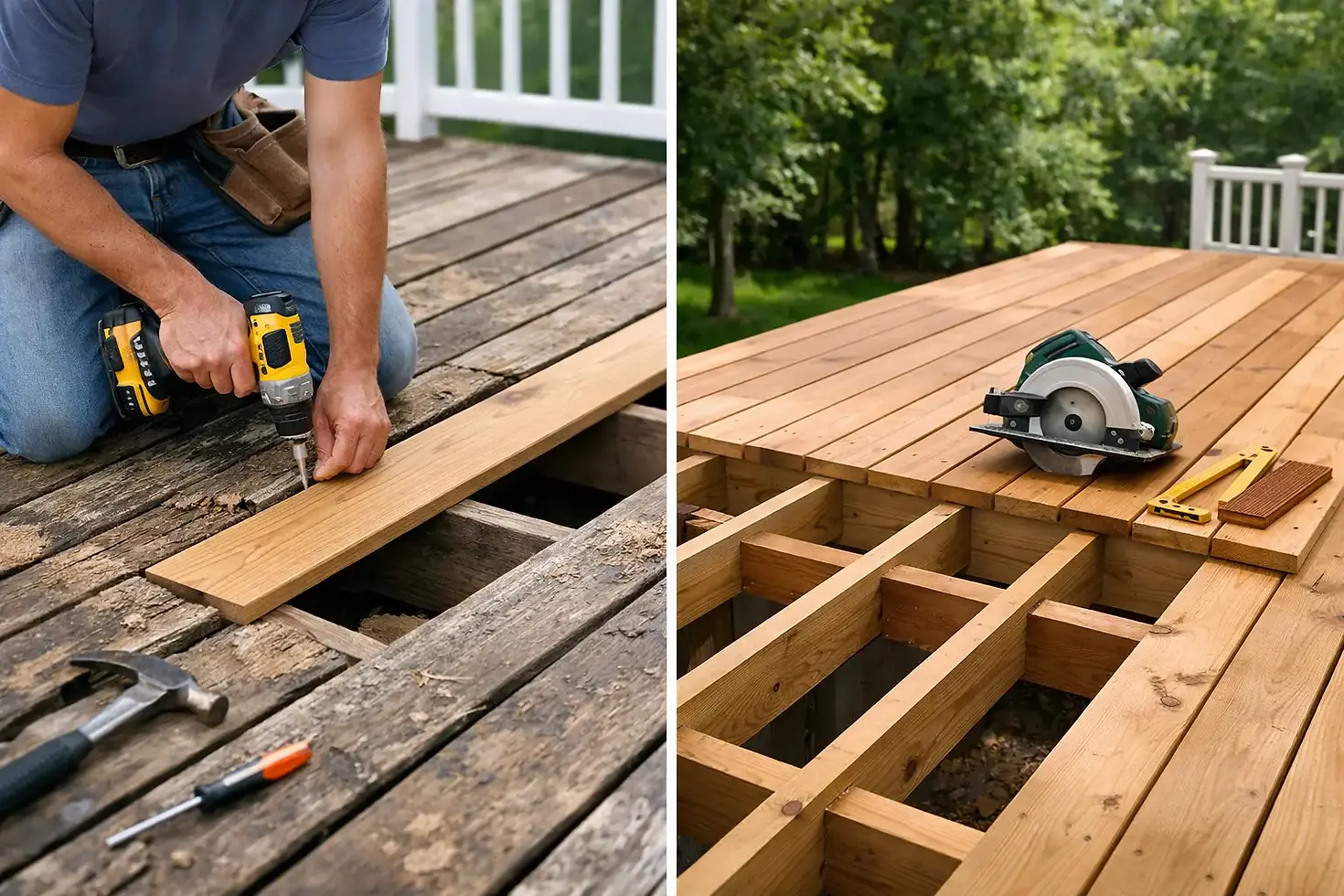
Deck Repair Versus Replacement
A deck can look fine from the yard and still have serious problems where it counts. Soft framing, loose railings, failing footings, and hidden rot do not stay small for long. When homeowners start weighing deck repair versus replacement, the real question is not just cost. It is whether the structure you have is still worth building on.
For many Stafford-area homes, the answer depends on age, material condition, code compliance, and what you want the space to do going forward. A simple repair can extend the life of a solid deck. A full replacement can save money and frustration when the structure is already past its prime. The right call starts with an honest look at what is sound, what is worn out, and what will keep performing for years.
How to think about deck repair versus replacement
The biggest mistake homeowners make is focusing only on the surface. New boards and stain can make an old deck look better, but appearance is not the same as structural life. The framing underneath matters more than the top layer you walk on.
If the joists, beams, posts, and ledger are still in good shape, repair may be the practical choice. If those core parts are compromised, replacement is usually the safer and smarter investment. That is especially true when multiple issues are showing up at once, such as movement underfoot, rail instability, widespread rot, or signs that the deck was built to older standards.
Repairs also make more sense when the problem is localized. A few damaged boards, one section of railing, or a staircase with wear can often be addressed without tearing everything out. But if every repair leads to another problem, that is usually a sign the deck has reached the point where patchwork no longer adds value.
When deck repair is the right move
A good repair job can buy meaningful time if the deck has a strong foundation. This is often the case when the deck is newer, the framing is dry and solid, and the damage is limited to exposed components.
Surface board replacement is common on wood decks that have taken weather over the years. Cracked or splintered boards do not always mean the entire structure is failing. The same goes for replacing rail sections, reinforcing stairs, tightening hardware, or correcting isolated drainage issues that caused early wear in one area.
Repair can also be the right move if you like the current layout and do not need major design changes. If the deck already fits your home and your backyard well, there is no reason to rebuild it from scratch just to solve a smaller issue.
That said, quality repair work has to go beyond cosmetics. If boards are replaced but the framing beneath them is weak, the fix will not last. A proper evaluation should confirm that the deck still has enough structural life left to justify the repair cost.
Signs your deck is a strong candidate for repair
A deck is often repairable when the problems are visible, limited, and not tied to major load-bearing components. That may include weathered decking boards, isolated rot in trim areas, loose handrails, or fasteners that need updating. In these cases, repairs can improve safety and appearance without the cost of a full rebuild.
Material type matters too. Some wood decks can be repaired in sections fairly easily if the framing is still healthy. Composite decks may also be repairable, but matching older products can be difficult if the original line has been discontinued or faded over time.
When replacement makes more sense
Some decks are simply too far gone for repairs to be cost-effective. The deck may still be standing, but that does not mean it is worth saving. If the structural frame is rotting, the ledger attachment is questionable, or the supports have shifted, replacement is usually the responsible path.
Older decks often have another issue beyond wear. They may not meet current building standards for rail height, stair geometry, connection hardware, or footing requirements. You can pour money into repairs and still end up with a deck that falls short in important ways.
Replacement also makes sense when your goals have changed. If you want a larger entertaining area, low-maintenance composite decking, upgraded rail systems, better stairs, or features like lighting and built-in seating, rebuilding can deliver more value than trying to force upgrades onto an outdated structure.
Common signs a deck should be replaced
Widespread rot is one of the clearest warning signs, especially when it affects joists, beams, posts, or the ledger board attached to the house. Significant movement, sagging, or uneven settling also points to deeper structural trouble. If railing systems are loose throughout the deck or the stairs feel unstable no matter how many times they are patched, the issues may be systemic rather than isolated.
Another red flag is repeated repair history. If the deck has already had several rounds of fixes and new problems keep surfacing, replacement may cost more up front but less over time. There is a point where continued repairs become maintenance on a failing asset.
Cost is important, but so is value
Most homeowners start with budget, and that is reasonable. Repair usually has a lower initial price than replacement. But lower cost today does not always mean better value over the next five to ten years.
If a repair solves the problem and gives you years of safe use, it can be money well spent. If that same repair only delays a rebuild by a season or two, the savings are not as strong as they look. You may end up paying for temporary work and then paying again for replacement.
Replacement tends to make more sense when repair costs begin stacking up across multiple systems. New decking, railing, stairs, structural reinforcement, and code corrections can quickly approach the price of rebuilding. At that point, replacement often gives you a longer service life, cleaner design, and better material options for the money.
Materials can change the decision
The material on your existing deck affects both repairability and long-term value. Pressure-treated wood can often be repaired section by section if the structure is solid. It is also usually easier to match than older specialty products. The trade-off is that wood requires continued maintenance to keep it protected and looking good.
Composite and PVC products offer a different value proposition. They typically require less upkeep and hold up well over time, but repairs can be more complicated if boards or colors are no longer available. For homeowners already dealing with an aging wood deck, replacement with composite or PVC can be appealing because it cuts down on future staining, sealing, and board replacement.
This is where long-term planning matters. If you are already thinking about switching materials, expanding the footprint, or upgrading the look of the space, replacement can be the cleaner path instead of repairing an older deck that no longer matches your goals.
Safety should settle the debate quickly
Some deck decisions are about budget and preference. Others are about safety, and those should not be delayed. A deck with soft framing, failing connections, unstable stairs, or loose guardrails is not just a maintenance issue. It is a liability around family, guests, and pets.
If there is any doubt about structural integrity, the deck needs a professional assessment before more use. Surface fixes should never be used to cover up a deeper problem. Good workmanship starts with a sound structure, not with making damage look less noticeable.
For homeowners who want a straightforward answer, this is usually the best way to frame it: repair a deck that still has strong bones, replace a deck that does not. That sounds simple because, in many cases, it is.
What homeowners in Stafford should consider
In this part of Virginia, decks take a steady beating from humidity, rain, heat, and seasonal swings. Moisture exposure can shorten the life of wood components, especially where drainage is poor or maintenance has been inconsistent. A deck that looks acceptable in early spring may reveal a lot more wear after a close inspection.
Local homeowners should also think about how they actually use the space. If the deck is central to grilling, entertaining, or family time, reliability matters more than squeezing one more season out of a structure that is already questionable. A well-built replacement can improve not just safety and appearance, but daily use of the backyard.
At Top Notch Decking, the best projects start with a clear assessment of what is there now and what the homeowner wants next. Sometimes that leads to a focused repair. Sometimes it points to a full rebuild with better materials and a layout that fits the home better.
A deck should feel solid every time you step on it. If yours does not, that is the place to start.


Comments