


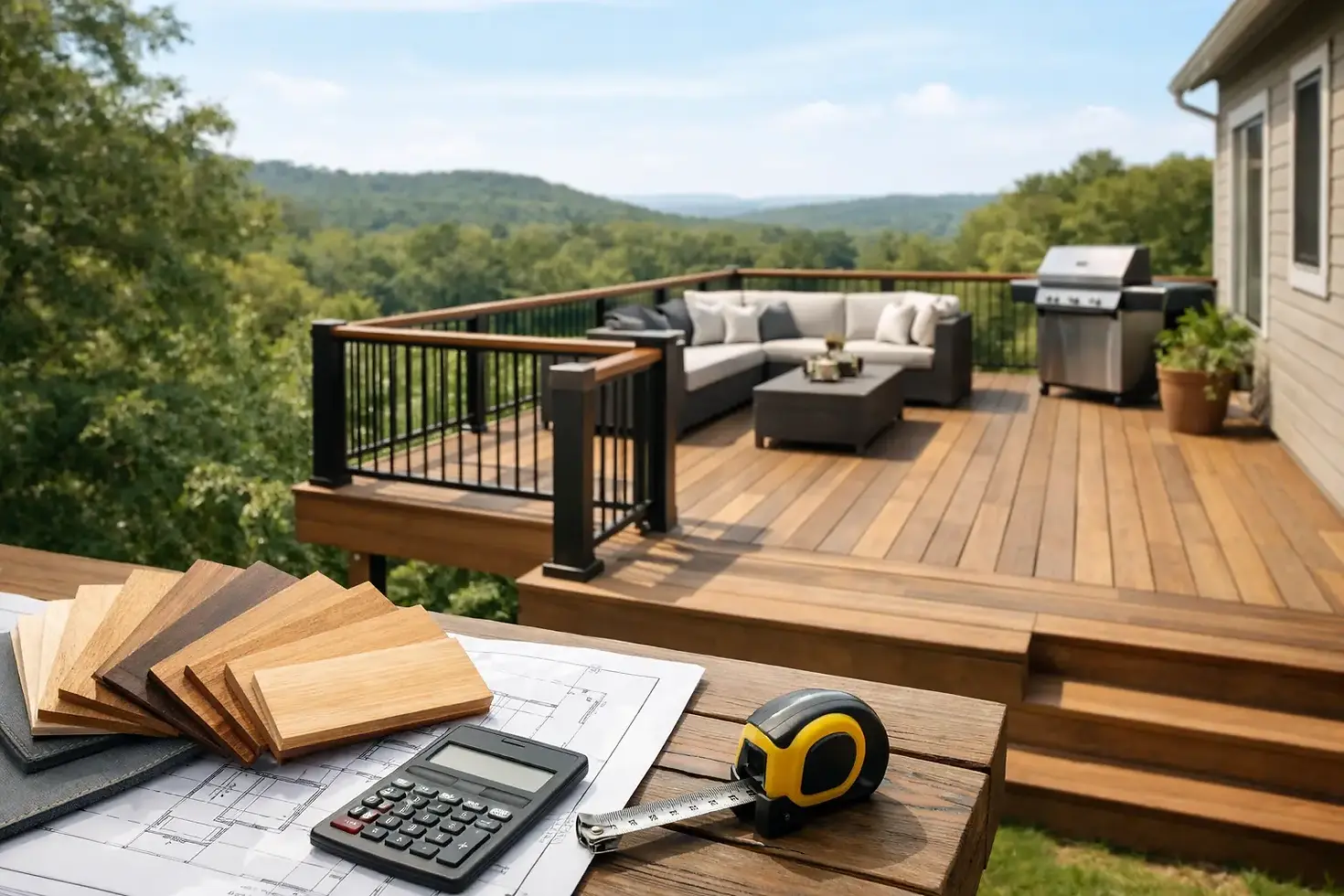
How Much Does a Deck Cost in Virginia?
A deck can look simple from the yard and still vary by thousands once the real build is priced out. If you're asking how much does a deck cost, the honest answer is that size matters, but materials, layout, height, stairs, railings, and site conditions matter just as much.
For homeowners in Stafford and nearby Northern Virginia communities, most deck projects land somewhere between a modest starter build and a fully customized outdoor living space with upgrades. That range is wide for a reason. A basic pressure-treated platform deck is one job. A large composite deck with picture framing, wide stairs, custom railings, and wrapped trim is another.
How much does a deck cost for a typical home?
For a professionally built deck, many homeowners can expect a starting point around $35 to $60 per square foot for a straightforward pressure-treated wood deck, while composite and PVC decks often start closer to $55 to $90+ per square foot depending on product line, framing complexity, and finish details.
Those numbers are useful for ballpark planning, but they are not a final quote. A 12x16 deck may cost far less than a 16x20 deck not only because of square footage, but because larger builds often include more stairs, more railing, and more structural support. Once a deck rises off the ground, labor and framing requirements change quickly.
In practical terms, a basic wood deck may fall in the range of roughly $8,000 to $15,000. A mid-range composite deck often lands between $15,000 and $30,000. A larger custom project with premium boards, lighting, skirting, multiple access points, and upgraded rail systems can push well beyond that.
What drives deck cost the most?
The biggest cost drivers are usually material selection, deck size, and how custom the design is. That sounds obvious, but each of those categories has layers.
Material choice changes the budget fast
Pressure-treated lumber is usually the most budget-friendly option up front. It remains a solid choice for homeowners who want a strong, functional deck and are comfortable with routine maintenance like cleaning, staining, and periodic repairs over time.
Composite decking costs more at the start, but many homeowners prefer it because it cuts down on maintenance and tends to hold its appearance longer. Brands such as Trex are popular for exactly that reason. PVC and premium capped composites can cost even more, especially if you move into higher-end color blends, wider boards, or heat-resistant product lines.
There is a trade-off here. Wood often lowers the initial project cost. Composite and PVC often reduce long-term upkeep. The right choice depends on whether you want the lower entry point now or less maintenance later.
Height and framing complexity matter
A low platform deck is usually simpler to build than a second-story deck with structural posts, beams, stairs, and guardrails. Once the deck is elevated, more engineering and labor are involved. That affects both materials and installation time.
If your yard slopes, pricing can also climb. Uneven grade, drainage concerns, and difficult access for crews and materials can all add labor. Homeowners often focus on the deck boards they can see, but the structure underneath is where a lot of the real work happens.
Railings, stairs, and trim add up
Railing is one of the fastest ways to increase cost. Standard wood railings are usually the most affordable. Composite rail systems, aluminum balusters, cable rail, and drink rails can move the number up quickly.
The same goes for stairs. A short single staircase is one thing. Wide steps, landing transitions, or multiple stair runs create more labor and more finish detail. Wrapped columns, fascia, skirting, and lattice also affect the final price, even if the deck footprint stays the same.
Deck cost by material
If you are comparing options, it helps to think in terms of project type rather than just product price.
Pressure-treated wood decks
These are often the best fit for homeowners who want a practical outdoor space at the lowest upfront cost. They can look great when built well, and they offer plenty of flexibility for size and layout. The trade-off is maintenance. Wood needs regular care if you want it to keep looking sharp and performing well.
Composite decks
Composite is a common middle-to-upper range choice because it balances appearance, durability, and lower maintenance. It generally costs more than pressure-treated lumber but saves time and ongoing upkeep. For many families, that trade is worth it, especially if the deck will be used heavily for entertaining.
PVC and premium decking
PVC and top-tier synthetic products often sit at the high end of the market. They can offer strong moisture resistance, lighter weight, and premium finishes. They also come with a premium price tag. These products make the most sense when long-term appearance, minimal maintenance, and upgraded aesthetics are a top priority.
Features that raise the price of a deck
A deck is rarely just a rectangle with boards and steps. Most homeowners want a finished outdoor space that feels intentional. That is where custom features come in.
Built-in benches, planters, privacy screens, and pergola framing all add labor and materials. Deck lighting, especially post cap lights and stair lights, adds electrical work and finish coordination. Picture-frame borders, diagonal layouts, and inlay patterns increase waste and installation time.
Skirting is another detail that changes cost. If the underside of the deck is visible, many homeowners want a cleaner finished look. Lattice is usually more budget-friendly. Horizontal skirting or trimmed composite panels look more polished but generally cost more.
If you want the deck to tie into a porch, patio cover, or fenced backyard layout, that can influence the design and price as well. The more integrated the project, the more important it is to plan the entire outdoor space instead of pricing the deck in isolation.
Permit, code, and inspection costs
In Virginia, deck construction often requires permits and inspections, especially for attached or elevated decks. These costs are usually a small part of the full budget, but they should not be ignored.
More importantly, code-compliant construction protects the homeowner. Proper footings, structural connections, ledger attachment, railing height, stair geometry, and hardware all matter. A lower price is not a better deal if the work is not built to last or does not pass inspection.
That is one reason custom deck pricing can vary so much between contractors. One quote may include the full scope of proper structural work, permit handling, and finish carpentry. Another may leave out key items that show up later as change orders or problems.
How to budget realistically
The best way to plan for deck cost is to set a target range, not a single number. If your ideal budget is $18,000, it helps to know whether that budget points toward a larger wood deck, a smaller composite deck, or a mid-sized deck with fewer custom upgrades.
Start with the way you plan to use the space. If you need room for a grill, table, and easy stairs to the yard, prioritize layout first. If low maintenance matters most, put more of the budget into materials. If curb appeal is the main goal, railings and trim details may deserve more attention.
It also helps to leave room for site-specific surprises. Older homes, difficult access, hidden framing issues at attachment points, or drainage corrections can affect the final scope. A clear on-site consultation is usually the difference between a rough online estimate and a price you can actually rely on.
So, how much does a deck cost when quality comes first?
The short answer is that a professionally built deck can range from several thousand dollars for a basic wood structure to tens of thousands for a larger custom composite installation. If the project is built with durable materials, solid framing, and clean finish work, the price will reflect that.
For homeowners who want a deck that feels like part of the home, not an afterthought, the smartest move is to look beyond square-foot averages. Ask what is included, how the structure will be built, what materials are being used, and how the finished deck will hold up over time. At Top Notch Decking, that is where the real value of the project shows up.
A good deck should fit your yard, your home, and the way you actually live outside - and when the build is done right, it keeps paying you back every season.


Comments