


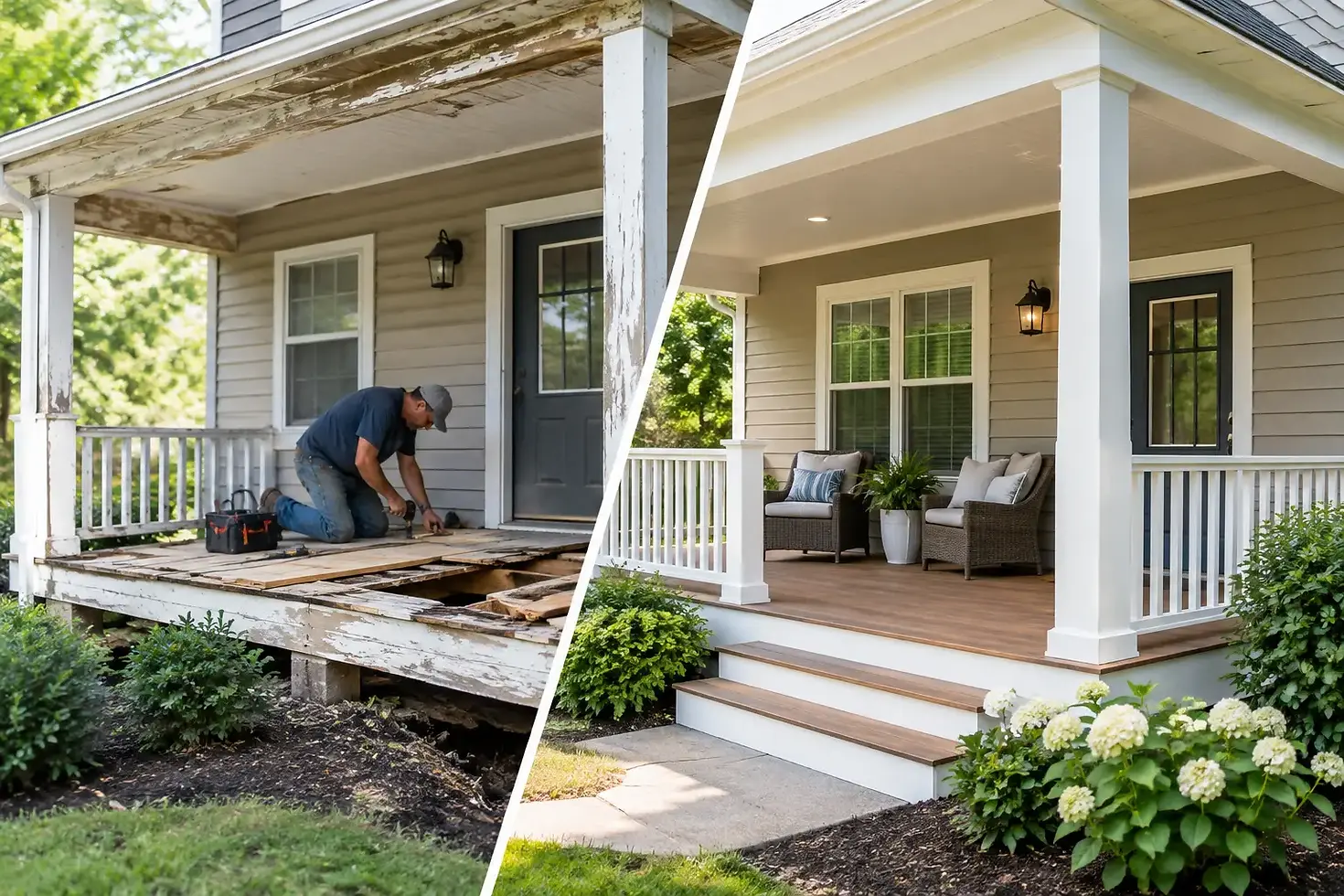
Porch Repair Versus Porch Replacement Explained
A porch can look tired long before it becomes unsafe. Peeling paint, loose boards, and weathered railings may point to manageable maintenance, while soft framing, shifting posts, or a sagging roof can signal a much larger problem. Porch repair versus porch replacement is not simply a question of which option costs less today. It is a decision about safety, durability, appearance, and how long you plan to enjoy your home.
For homeowners in Stafford and Northern Virginia, the right answer often comes down to what is happening below the surface. Our changing seasons, moisture, and freeze-thaw cycles can take a real toll on wood framing, footings, and exposed connections. A professional inspection helps separate cosmetic wear from structural damage before you invest in the wrong fix.
When Porch Repair Makes Sense
Repair is the practical choice when the porch's main structure is sound. If the footings are stable, support posts are solid, framing is free of serious rot, and the porch remains level, targeted work can extend its useful life without the cost and disruption of a full rebuild.
Common repair projects include replacing a few damaged deck boards, rebuilding a section of railing, tightening loose steps, replacing worn trim, or correcting minor water damage before it spreads. A roofed porch may also need isolated repairs to screens, ceiling boards, fascia, or roof details. These improvements can restore safety and curb appeal when the underlying structure still has years left.
A repair is especially worthwhile when the porch design already works for your family. Maybe the footprint is the right size, the stairs land where they should, and the roof provides the shade you want. In that case, preserving a good structure and addressing specific failures is often the responsible investment.
Signs the Structure Is Still a Good Candidate for Repair
A solid porch typically feels firm underfoot and shows no meaningful movement at the posts, railings, or stairs. Minor cracks in paint or isolated board damage are not automatically signs of failure. Surface weathering is normal, particularly on pressure-treated wood that has gone years without proper sealing or staining.
The key question is whether damage is localized. One rotten tread is a repair. Multiple soft areas across the framing, posts, and stair stringers suggest that moisture has been working for a long time and a larger solution may be needed.
When Porch Replacement Is the Better Investment
Replacement becomes the smarter route when the porch has widespread structural deterioration or no longer meets your needs. Patching a failing frame can lead to repeated service calls, mismatched materials, and a porch that still feels dated or unstable. At a certain point, putting more money into repairs only delays the rebuild.
Watch for posts that are soft at the base, beams with deep rot or splitting, sagging floors, bouncy sections, loose railings, or stairs that have pulled away from the structure. Water damage near the house is another concern. If flashing, ledger connections, or roof transitions have failed, the issue may affect more than the porch itself.
Replacement also makes sense when there are foundation or footing problems. Frost heave and settling can leave a porch out of level, strain connections, and make doors or steps difficult to use. A proper rebuild provides the opportunity to address support conditions correctly rather than covering them up with cosmetic work.
Replacement Lets You Fix the Design, Not Just the Damage
A full porch replacement is an opportunity to improve the way you use your outdoor space. Homeowners often choose to enlarge a cramped entry porch, add a covered section, widen stairs, improve railing style, or create a more welcoming front elevation. A rear porch can be redesigned for dining, grilling, or a screened outdoor retreat.
It also gives you a clean starting point for better materials. Pressure-treated wood remains a dependable and cost-conscious choice when properly built and maintained. Composite, PVC, and products from brands such as Trex and Azek can reduce routine maintenance and offer a more consistent finished appearance. The best material depends on the porch design, sun exposure, budget, and the level of upkeep you want to take on.
Porch Repair Versus Porch Replacement: The Cost Question
Repair generally has a lower upfront price because it uses less labor and material. But the lowest initial estimate is not always the lowest long-term cost. A repair that only addresses visible damage can become expensive if hidden rot, weak framing, or poor drainage causes new problems within a few seasons.
Replacement requires a greater investment, particularly when it includes demolition, new footings, framing, roofing, railings, and upgraded finishes. In return, it can provide a structure built to current expectations for safety, drainage, and long-term performance. It also creates a more unified appearance than a porch with several generations of patched materials.
Ask for a clear assessment of what is being repaired, what conditions may be discovered after materials are removed, and whether the remaining structure has a reasonable service life. A trustworthy contractor should explain the trade-offs plainly. If repair is enough, you should not be pushed into replacement. If replacement is the safer choice, the reasons should be visible and specific.
Start With the Cause of the Damage
Porch problems usually begin with water. Rain that drains toward the house, missing flashing, undersized gutters, exposed end grain, or posts sitting directly on damp soil can shorten the life of even quality lumber. Before choosing a repair or replacement, identify why the damage happened.
If the source of moisture is not corrected, new boards can fail just like the old ones. A sound project may involve improving drainage, adding proper post bases, updating flashing, correcting roof runoff, or selecting materials better suited to the exposure. Good craftsmanship is not just about how the finished porch looks. It is about protecting the parts you cannot see once the project is complete.
Age matters, but it is not the only factor. A well-built 20-year-old porch may need a focused repair, while a poorly detailed porch that is only a few years old can have serious water-related issues. Inspection should drive the decision, not a guess based on the calendar.
How to Make the Right Call for Your Home
Start by thinking about your goals. If you plan to sell soon and the structure is sound, a well-executed repair may restore the porch's appearance and confidence for buyers. If you expect to stay in the home for years, replacement may be the better value when it solves structural concerns and gives you the layout and materials you really want.
Next, consider how much disruption you can accept. Repairs are typically faster and more contained. Replacement is a larger construction project, but it avoids the cycle of opening up one section at a time as new issues appear. It can also be the right time to coordinate related work, such as a new deck connection, exterior lighting, or updated steps and walkways.
Finally, do not judge the porch from the top side alone. The boards, railings, and paint are the visible finish. The posts, beams, ledger connection, footings, and water-management details determine whether that finish has a dependable structure behind it.
A porch should feel solid when your family uses it and look like it belongs with the rest of your home. Whether the right path is a targeted repair or a complete rebuild, choose work that addresses the real condition of the structure and gives you confidence for the years ahead.


Comments