


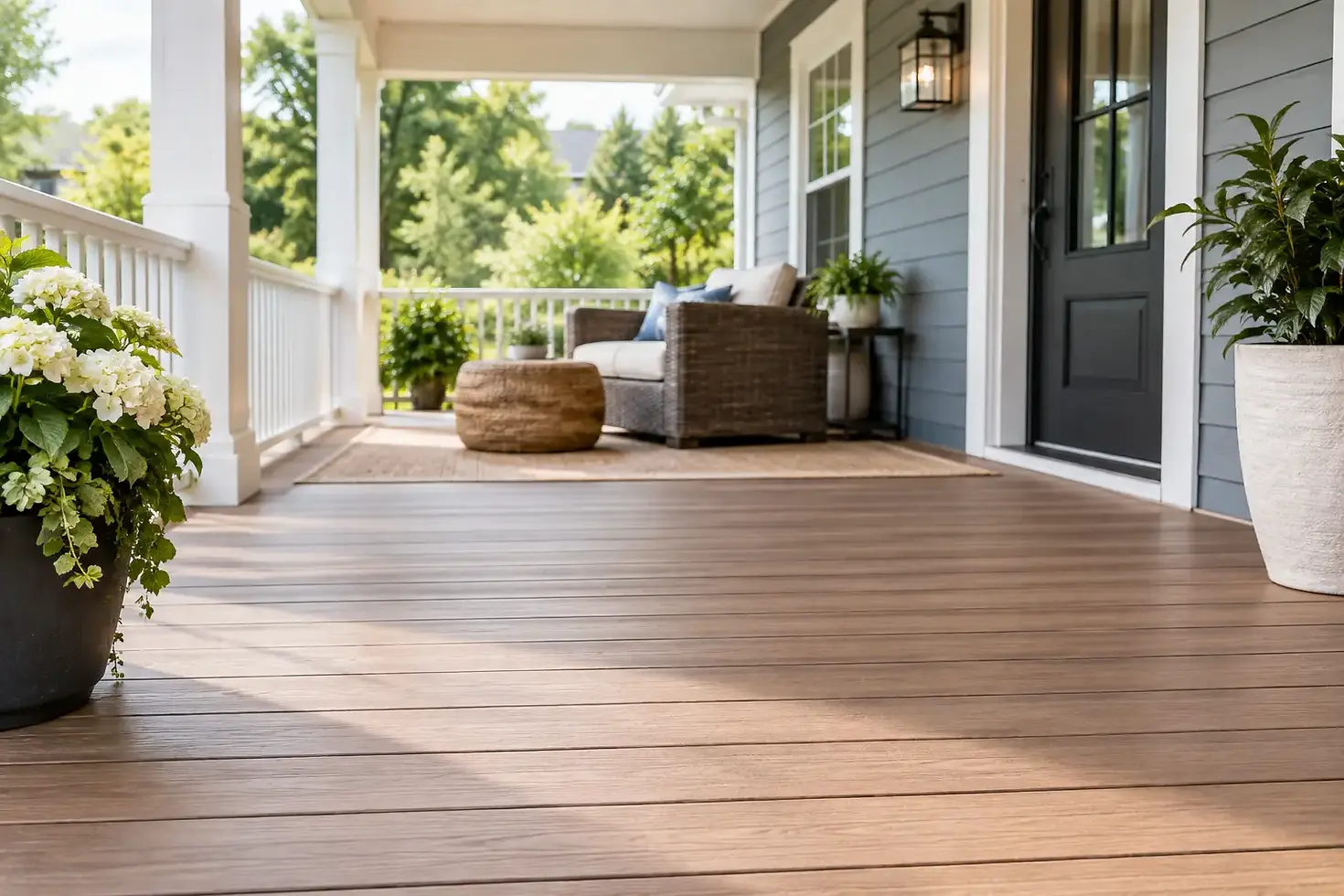
What Is the Best Porch Flooring for Your Home?
A porch floor has to do more than look good on installation day. It needs to handle wet shoes, summer heat, pollen, furniture legs, and years of changing Virginia weather without becoming a constant maintenance project. So, what is the best porch flooring? For most homeowners, the answer depends on whether the porch is covered, how much maintenance they want to take on, and the look they want the finished space to have.
The right material should fit the structure, the budget, and the way your family actually uses the porch. A front porch that sees rain and foot traffic has different needs than a screened porch used for weekend dinners. Quality comes from choosing the right product and installing it correctly from the framing up.
What Is the Best Porch Flooring for Virginia Homes?
For a covered porch, tongue-and-groove porch boards, composite decking, PVC decking, and tile can all be strong choices. For an open porch exposed to direct rain, composite, PVC, pressure-treated wood, or concrete generally makes more sense because each can better manage regular moisture when installed with proper drainage.
There is no single material that wins in every situation. Composite and PVC are often the best fit for homeowners who want low maintenance and long-term durability. Wood remains a solid option for those who prefer a traditional appearance and are willing to keep up with sealing or staining. Tile and concrete can work well when the porch structure is designed to support them and water management is handled properly.
Before choosing a color or board profile, look at the conditions around the porch. Does it receive strong afternoon sun? Does rain blow in from one side? Is the porch elevated, or does it sit on a slab? Those details affect the material that will perform best over time.
Porch Flooring Materials Worth Considering
Pressure-Treated Wood
Pressure-treated wood is a familiar and cost-effective porch flooring option. It is treated to resist rot and insect damage, and it can be stained or painted to match the home. For homeowners who want a natural wood surface without the higher upfront cost of composite or PVC, it remains a practical choice.
Its trade-off is maintenance. Wood expands and contracts with moisture changes, and it can check, crack, splinter, or fade over time. It should be cleaned regularly and protected with a quality stain, sealer, or paint system. When the boards are installed with proper spacing and good airflow underneath, pressure-treated wood can provide years of service. It simply requires more attention than synthetic materials.
For a covered porch, traditional wood porch boards can create a classic look that fits many Northern Virginia homes. On an open porch, standard deck boards with gaps between them are usually better at shedding water than tightly fitted tongue-and-groove boards.
Composite Porch Flooring
Composite boards combine wood fibers and recycled plastic. They are a popular choice for homeowners who want the appearance of wood with less routine upkeep. Composite flooring resists rot, insect damage, and splintering, and it does not need to be stained or sealed every few years.
Trex and other established composite products are well suited to porches that get regular use and exposure. They come in a range of colors and grain patterns, so homeowners can choose a finish that works with the home rather than settling for one basic look. A capped composite board also offers better stain and fade resistance than older generations of composite materials.
The main considerations are cost and heat. Composite generally costs more upfront than pressure-treated lumber, and darker colors can feel noticeably warm in full sun. It also needs proper joist spacing, fasteners, and ventilation. A quality installation matters because poor framing or insufficient support can lead to movement, uneven boards, and drainage issues regardless of how good the decking material is.
PVC Porch Flooring
PVC decking is made without wood content, making it especially resistant to moisture, rot, and insects. It is one of the strongest choices for open porches, poolside areas, and other spaces that stay wet longer after a storm. It is also lightweight and easy to clean with regular soap-and-water care.
For homeowners focused on low maintenance, PVC can be an excellent long-term investment. Products from manufacturers such as Azek offer refined color options and realistic wood styling, while eliminating the concern of wood fibers absorbing moisture. PVC is also less likely than traditional wood to crack or splinter under normal use.
The higher price is the biggest drawback. Like composite, PVC can also get hot in direct sun, especially in darker colors. Some homeowners prefer its clean, consistent finish, while others feel natural wood has more character. The right choice comes down to priorities: less maintenance and moisture resistance, or a lower initial cost and a more traditional material.
Tile or Stone Porch Flooring
Porcelain tile, natural stone, and similar finishes can give a covered porch a polished, indoor-outdoor feel. Porcelain is especially practical because it is durable, easy to clean, and available in finishes that resemble wood, slate, or concrete. It is a good option for a porch built over a concrete slab or a properly engineered substrate.
This is not a material to install over just any porch frame. Tile needs a stable base, proper waterproofing, expansion joints, and a slope that directs water away from the house. In Virginia, the tile and setting materials also need to be rated for freeze-thaw conditions if the porch is exposed to the elements. A beautiful tile floor can fail quickly if movement in the structure causes cracking underneath.
Stone brings natural variation and strong curb appeal, but it may need sealing and can be more expensive to install. Both tile and stone can be slippery when wet unless the finish is selected carefully. For a screened or covered porch, they can be an attractive option when the structure supports the system.
Concrete and Concrete Coatings
A concrete porch slab is durable, stable, and well suited to ground-level entries. It can be left with a simple broom finish, stained for color, stamped for texture, or covered with a coating system. This makes concrete one of the more flexible options for homeowners updating an existing front porch.
Concrete still needs attention to drainage and cracking. Minor hairline cracks are common, but larger movement can affect the appearance and performance of coatings or overlays. Surface preparation is critical before applying any finish. If water pools near the home, changing the coating alone will not solve the problem. The slab should be evaluated first.
Match the Flooring to How You Use the Porch
A fully covered front porch gives you more flexibility because the floor receives less direct rain and sun. Wood porch boards, painted flooring, composite, PVC, and tile may all be appropriate. The decision often comes down to style and maintenance expectations.
An open porch or uncovered entry needs a material that can drain and dry. Composite, PVC, pressure-treated deck boards, or concrete are usually more dependable in these conditions. Avoid treating an exposed porch like an interior room. Water needs a clear path off the surface and away from the house.
Think about everyday comfort, too. If children or pets use the porch barefoot, board temperature and surface texture matter. If you entertain frequently, a low-maintenance surface may be worth the higher initial investment. If the porch is a historic-style focal point, painted wood or tongue-and-groove boards may provide the appearance that modern materials cannot fully duplicate.
Installation Details Matter as Much as the Material
Even the best porch flooring will not perform well over weak framing, poor drainage, or inadequate ventilation. The porch structure must be sound, level where it should be level, and sloped where water needs to move. Flashing at the house, proper ledger attachment, and the condition of the support posts and beams all deserve attention before new flooring goes down.
For composite and PVC, the framing must meet the manufacturer’s joist-spacing requirements. For wood, the boards need room to move with seasonal humidity. For tile, the substrate has to be stable enough to prevent cracking. These are not small details. They are the difference between a porch that looks finished for years and one that starts showing problems after the first few seasons.
At Top Notch Decking, we help homeowners weigh these details before a material is selected. A straightforward site evaluation can identify moisture concerns, structural needs, and design opportunities early, when they are easier to address.
The best porch floor is the one that fits your home, stands up to its exposure, and gives you more time enjoying the porch than maintaining it. Start with how the space will be used, then choose a material and installation approach built to last.


Comments